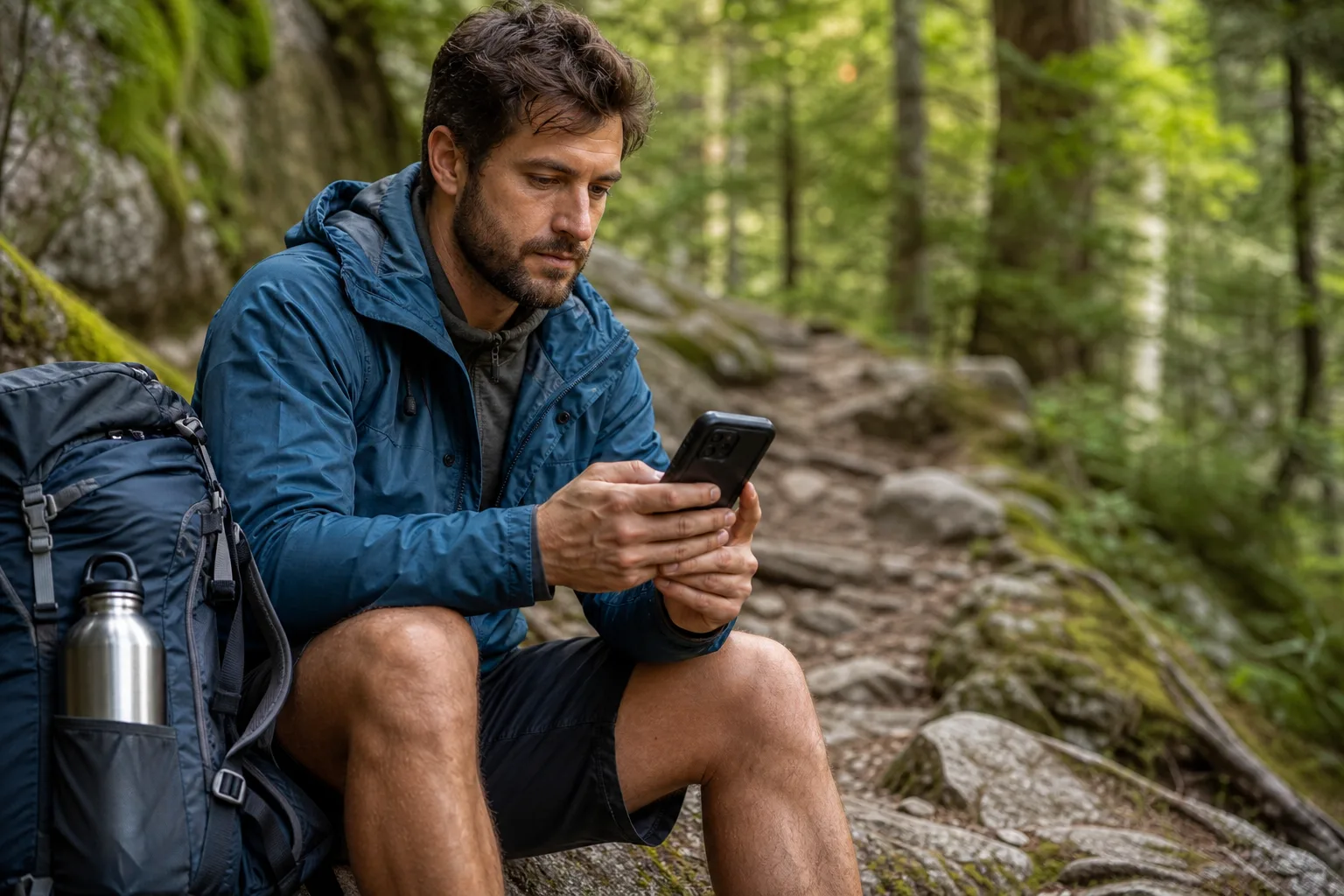
Choose a hiking case around the pocket, glove and charging cable you actually take outside. A shell that stays in your pack because it is awkward to retrieve is a poor navigation setup, however impressive its drop claim. First decide whether the phone will live in a zipped pocket or use a purpose-built attachment.
Match the case to the part of the hike that causes trouble
| Your usual situation | Useful feature | Check before the return window closes |
|---|---|---|
| Phone rides in a zipped hip-belt pocket | Case dimensions and unobstructed pocket access | Load the pack normally, buckle it and close the pocket around the cased phone without pulling the zipper against a corner. |
| Frequent map checks with gloves | Buttons and screen edges you can reach | While stationary, open your map, zoom and lock the screen with the gloves you use. A case cannot make an incompatible glove work with a touchscreen. |
| Dusty paths and an exposed charging opening | A port cover with room for the actual cable plug | Open and close the cover; connect the cable fully without holding the cover out of the way with force. |
| Phone comes out for photographs near uneven ground | A documented strap attachment system | Follow the maker's fitting instructions and inspect the anchor. Keep any strap short enough to avoid snagging your equipment. |
| Rain, spray or a water crossing | A separately specified water barrier | Check the enclosure's seal procedure, phone fit and limits. A port flap alone does not establish waterproofing. |
A concrete example: OtterBox Defender Series Pro XT for iPhone 17 Pro
The official iPhone 17 Pro listing identifies a polycarbonate and thermoplastic-elastomer construction, port covers, strap anchors, raised edges and MagSafe magnets. It also lists an integrated Camera Control button. These are useful items to put on a fit checklist; they do not establish how the case will handle your gloves, pocket or a particular fall.
OtterBox describes this model as tested to seven times military drop standard 810G-516.6. That is the manufacturer's claim, not seven times the protection of another case. The listing does not provide a common test dataset for competing products, so this guide does not rank their impact performance. Confirm the exact phone model and regional product before buying; “Defender” alone is not a compatibility specification.
Check retention without a drop test
- Fit every corner over the phone and check that no edge lifts the screen protector.
- Over a bed or padded surface, try normal pickup, camera use and return to the pocket.
- If using a strap, use its approved anchor rather than threading a cord through a speaker opening. Check that the plug still seats fully.
- Repeat with the pack loaded. If you need to loosen the belt or tug the phone free every time, change the carrying position before buying more accessories.
A magnetic charging connection is not automatically a retention system for walking. Use a mount only for the activities its manufacturer specifies, and stop in a stable place before handling the phone. A case is not a substitute for a secure pocket.
Keep water and grit separate from impact protection
Apple's water-resistance guidance explains that resistance can diminish with normal wear. It also says to avoid charging a wet phone and to follow its drying instructions. A thick case does not extend those limits. For a separate enclosure, use our waterproof-pouch fit and seal checklist.
After a trip, remove the phone following the case instructions and inspect the inside for grit, split corners and a damaged strap anchor. Record which pocket worked and where handling was awkward. That short record tells you more about your next purchase than another unqualified “rugged” label.
Method: official product specifications and a practical fit checklist, checked September 15, 2026. No impact or waterproof tests were performed. See How We Test.