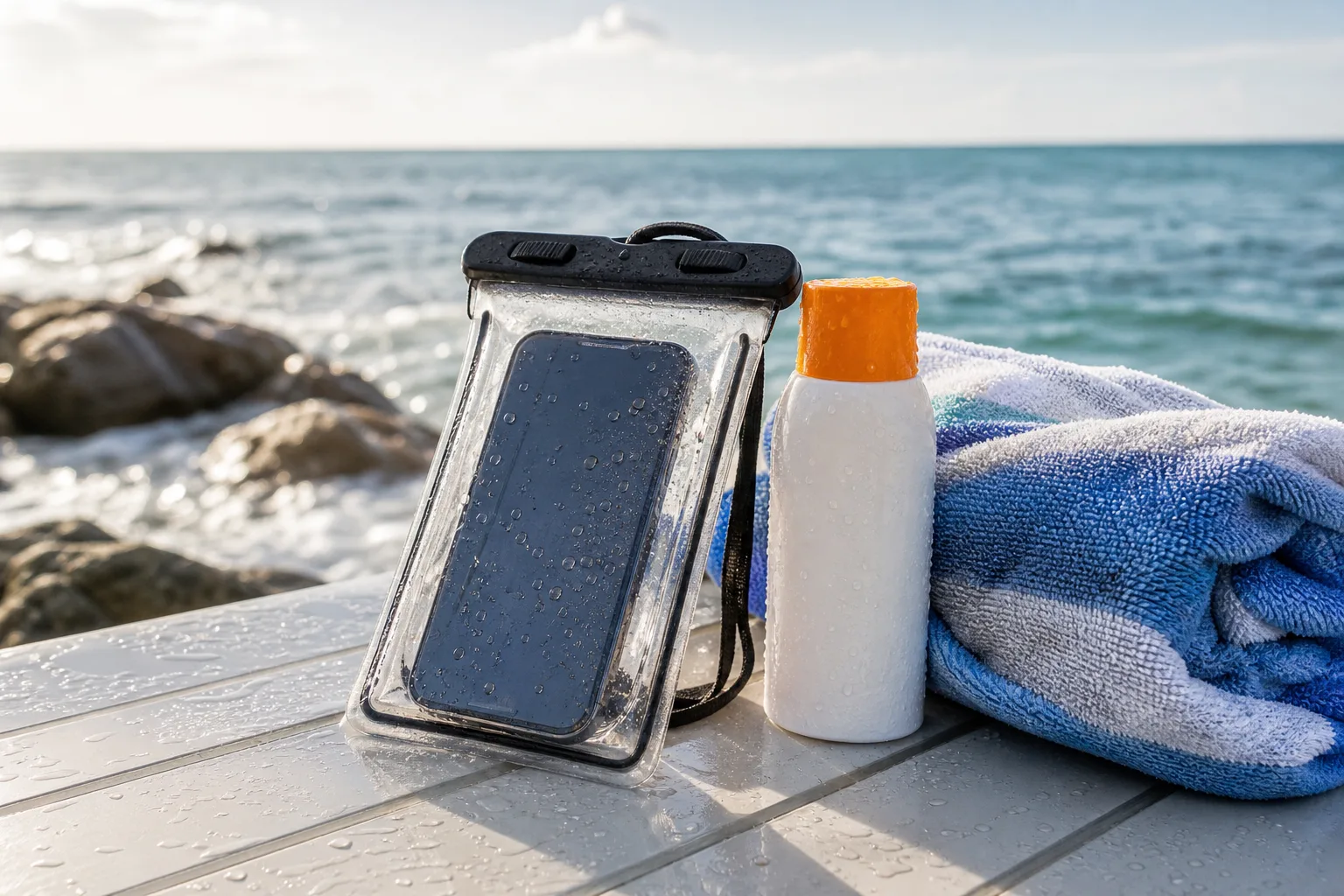
A phone pouch is a seal around an opening you repeatedly use. Start with the closure instructions and the product's stated water-exposure limits, not a lifestyle photo of someone swimming. Check whether the claim covers your intended activity and whether the manufacturer excludes damage to the contents.
Check usable space
Compare the internal dimensions with your phone and case together. Leave enough room to close the seal without folding the phone against it. A camera bump, strap insert or bulky case can interfere even when the screen size appears to match.
Inspect and check the seal
Follow the manufacturer's pre-use leak-check procedure with the phone removed. Inspect the sealing surfaces for sand, hair or damage and close each latch as instructed. A successful empty-pouch check is useful, but it does not prove the pouch will remain waterproof indefinitely or beyond its stated limits.
Separate water protection from flotation
A sealed pouch may still sink. If flotation is claimed, check the supported load and whether your complete phone-and-case combination fits that limit. Do not rely on an unverified floating claim for recovery in open water. A tether also needs an appropriate attachment point and safe use.
Open it in a dry place
Follow the maker's cleaning and drying instructions before opening the pouch so water on the outside does not reach the phone. Avoid charging a wet device. Apple's water-resistance guidance explains that resistance is not permanent and gives handling advice after liquid exposure. A phone's own rating is not a reason to ignore the pouch's limits.
Research-based guidance. Read our sources, testing and illustration policy.