A travel cable kit gets smaller when each item has a named job. Lay out the devices and adapters you will actually take, then draw a line between the ports that need connecting. This guide maps those connections across a trip. Use the daily carry checklist for deciding which accessories belong in an ordinary commute.
Map devices to charging and data tasks
List each device, its exact model and the task you need it to perform. Charging a phone, moving files and using an in-car phone interface are separate jobs to check. Write down the source port, cable and any adapter for each route. Leave a function marked unverified until you have checked the relevant specifications and tried the packed combination.
Use this travel connection worksheet
Copy the blank fields into your notes. Replace the suggested trip stages with your own itinerary and add one row per device that needs a connection. These are planning prompts, not results from our testing.
| Trip stage and task | Your complete connection | Your pre-departure result |
|---|---|---|
| In transit: phone charging | Source / port / cable / phone model: ____ | Charging indication and usable reach: ____ |
| At accommodation: devices needed together | Device models / assigned ports / cables: ____ | Connections checked together / limitation: ____ |
| Data or in-car connection, if needed | Device / required function / cable or adapter: ____ | Required function works / still unverified: ____ |
| Backup for an essential connection | Primary item / independent replacement: ____ | Replacement checked / remaining gap: ____ |
Use two lengths deliberately
A short cable can keep a phone and bank together in a small bag. A longer cable may be necessary from a hotel wall socket to a bedside table. One length rarely handles both equally well. Assign each packed length to a route on your worksheet. Pack the longer cable in a loose loop with a reusable tie so it can be taken out without emptying the pouch.
Check adapters as carefully as cables
A small connector adapter adds another part to lose and may not support every intended function. Check the manufacturer's claims for charging, data and any display connection. If a cable is needed for an in-car phone interface or file transfer, label it so it is not replaced with a charge-only lead. For certified cable markings, consult USB-IF.
Check coverage before choosing the pouch
Connect each device using the packed adapter and cable before departure. Check both the charging indication and any data function you need. Where several devices will share a charger, check the planned combination together and consult its port-allocation specifications. Record any limitation instead of assuming an untried combination will work.
Remove any item whose purpose you cannot name, but keep an independent backup cable if losing the primary one would interrupt an essential trip function. Then use the pouch layout worksheet to arrange the selected items.
Keep travel documents accessible
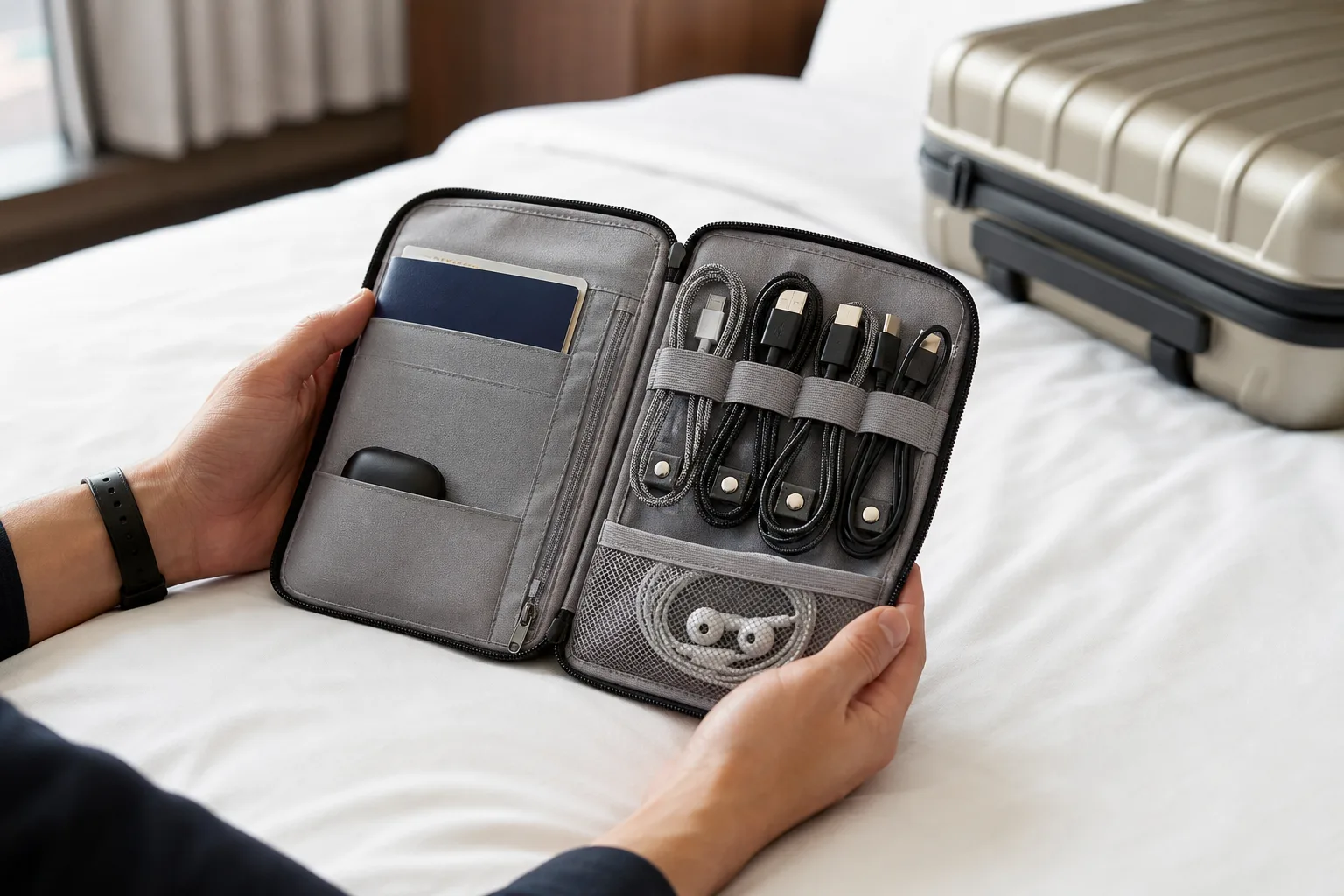
If cables share a passport pouch, keep them in a separate compartment. Hard plugs should not press against documents, and the passport should come out without spilling accessories. A dedicated small cable pouch may be more practical than forcing everything into one organizer.
Research-based guidance. Read our sources, testing and illustration policy.