A pocket power bank has two separate jobs: cover the battery shortfall and fit somewhere you will actually carry it. A larger capacity label does not solve an awkward shape. Start by recording the phone's battery percentage when you leave, at lunch and when you return for three ordinary days; add a separate note for long navigation or camera days.
Two 10,000mAh packs with different shapes
The following manufacturer specifications were checked September 15, 2026. They illustrate the carry trade-off, without ranking charging speed or durability. Prices and availability are not part of this comparison.
| Exact model and source | Body and stated weight | Connection |
|---|---|---|
| NITECORE NB10000 Gen3 manual | 122 × 59.2 × 10.6mm; 150g ±5g, accessory excluded | Two USB-C ports; separate cable required. Up to 22.5W single-port output; up to 18W input. |
| Anker Nano A1259 specification page | 104 × 52.3 × 26mm; 215g | Built-in USB-C cable, USB-C port and USB-A port; USB-C cable/port rated up to 30W input or output individually. |
The NITECORE body is longer and wider; the Anker body is thicker. Trace each footprint on paper, then fold a cardboard spacer to its stated thickness. Try it in the pocket while seated, leaving room for the phone and cable connector. This is a fit check you can do before purchase, not a substitute for weighing a delivered pack. Add the separate cable to any comparison involving the NITECORE.
Read capacity at the stated voltage
NITECORE lists 10,000mAh at 3.85V, or 38.5Wh, for this model's cells. It separately lists 6,200mAh at 5V under its typical 2A rating. Multiplying gives 31Wh for that second figure. They refer to different measurement conditions, which is why comparing “10,000mAh” directly with a phone's battery label can mislead.
You can use an explicitly assumed example for planning: if a phone had a 15Wh battery and needed another 40 percentage points, the battery-energy shortfall would be about 6Wh. The pack must supply more than that because conversion and phone activity consume energy. This example does not establish how many charges either product delivers to your phone. Record the percentage gained during your own normal use after purchase.
Choose around the day's failure point
| Your recurring problem | Prioritize | Check before buying |
|---|---|---|
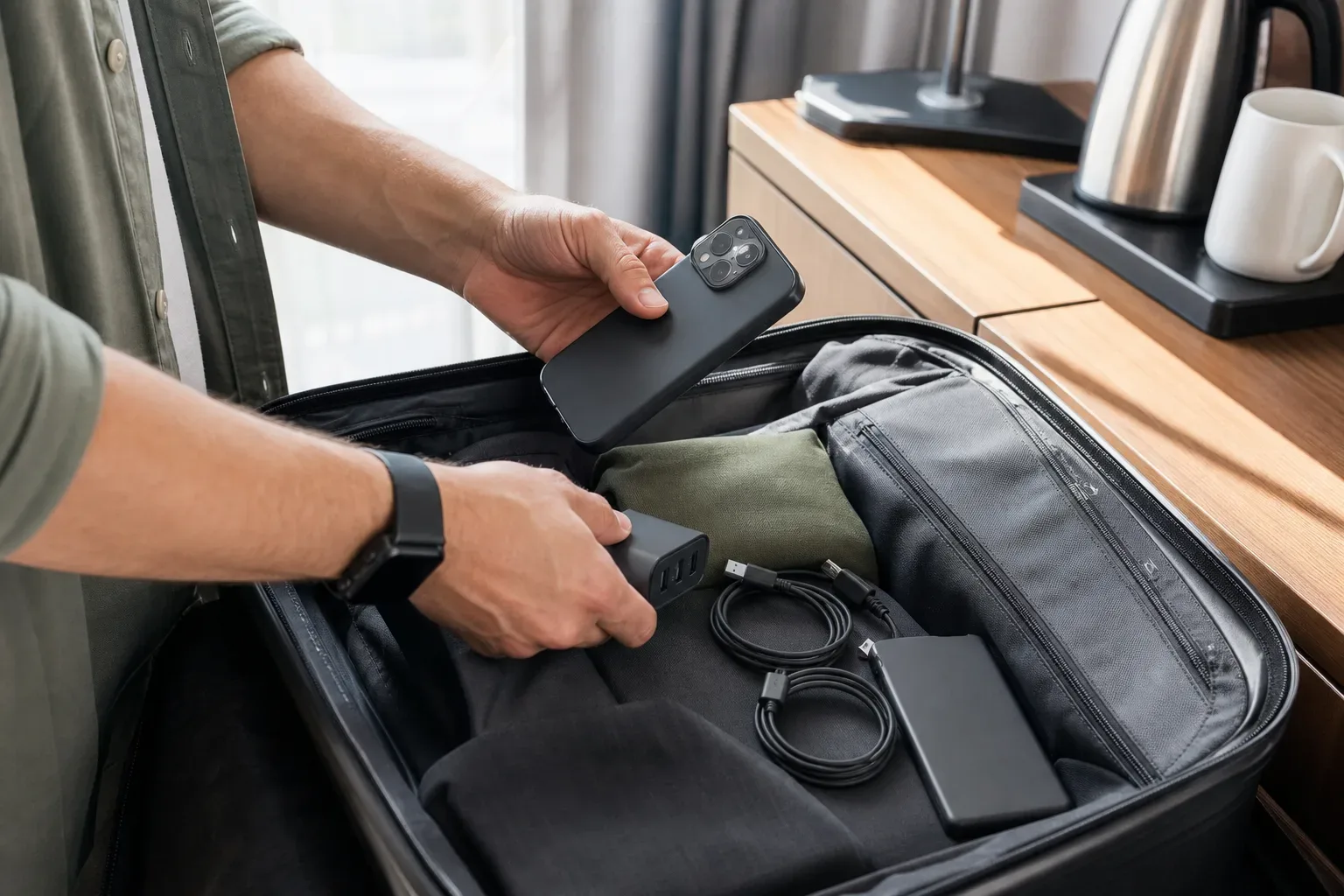
| Phone needs a brief top-up before the commute | A complete kit small enough to carry daily | Pocket depth, seated comfort and the connection through the case |
| Phone runs navigation while you walk | A cable route that lets the pack stay in a bag | Reach with the bag closed; avoid a connector carrying the pack's weight |
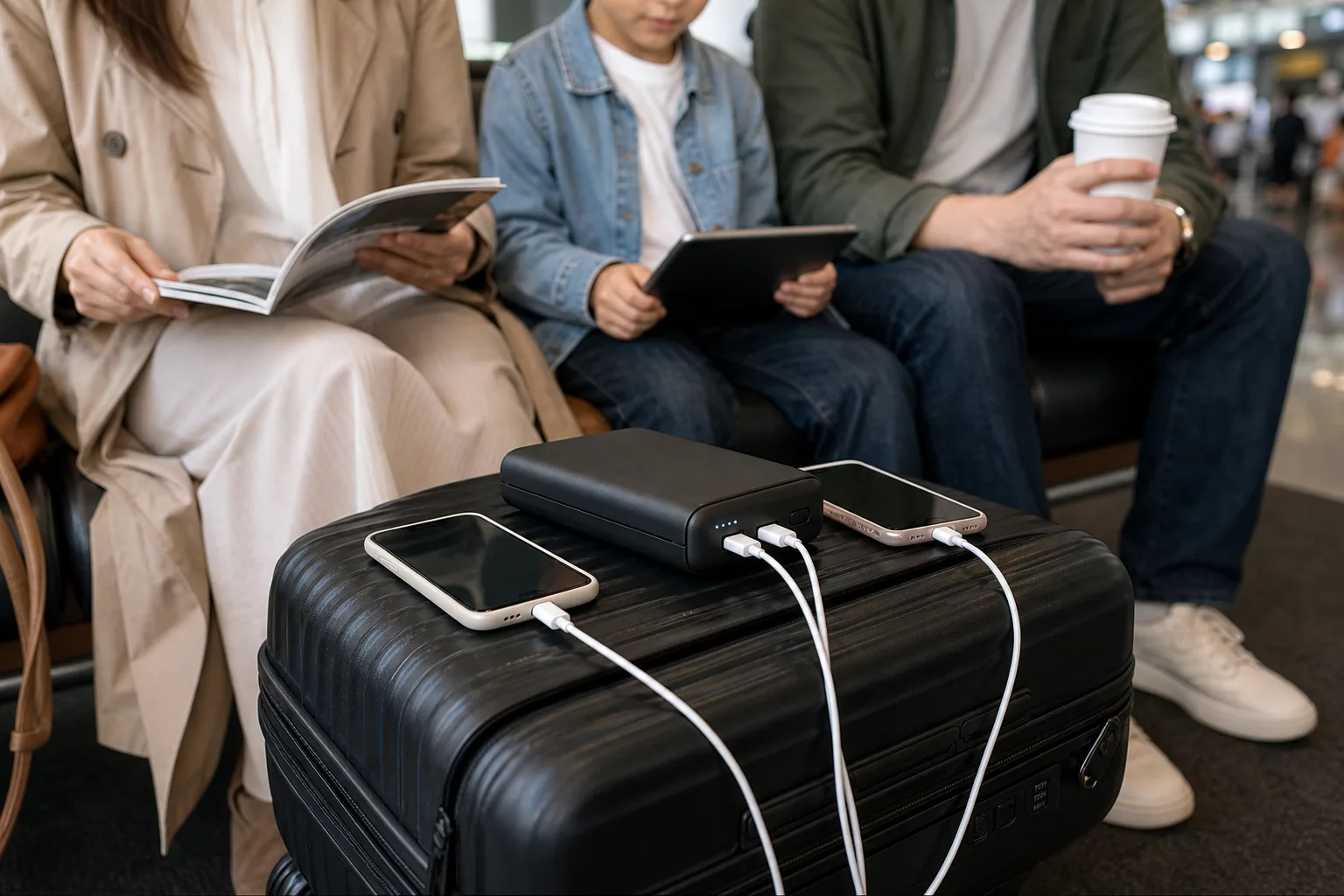
| Two people need power at once | Documented shared output and enough reserve | Two-device ratings; do not double a single-port headline |
| The pack is often empty when needed | A repeatable place and time to recharge it | Input rating and whether your existing adapter supports it |
Make the first week a useful check
Record starting phone and pack percentages, approximate connection time, phone activity and whether the kit was comfortable enough to keep carrying. Treat those notes as observations of your own setup, not a laboratory capacity test. If the pack is too awkward or cannot cover the real shortfall, use the seller's applicable return process while you still can.
For a pack with an attached lead, use the built-in cable and repairability checklist. Before flying, separately check the flight capacity and packing guide; a useful daily pack still needs to meet the relevant travel rules.
Published specifications and the illustrative calculations above follow our research and testing method; product endurance has not been measured for this comparison.