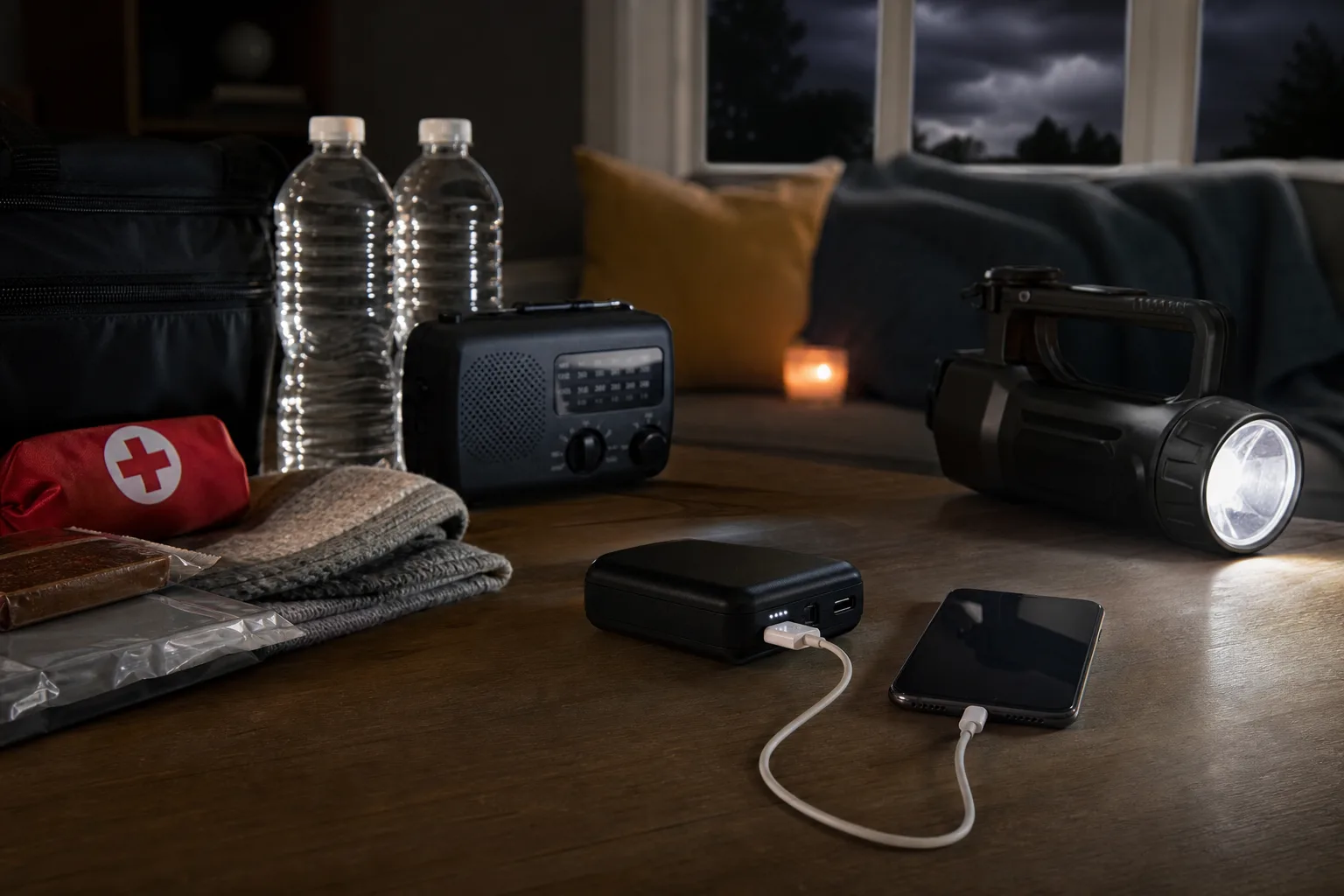
A backup battery is only useful when it can be found, has charge and connects to the phone that needs it. Build the kit around those three checks. Put a compatible cable with the bank instead of relying on a cable that normally lives in another room.
Choose the communication job
List the phones that need backup power and the uses you want to preserve: messages, calls, weather updates and essential documents. Avoid treating a phone bank as a whole-house power solution. If other equipment needs electricity, assess it separately using its manufacturer's requirements.
Keep the kit accessible
Use a recognizable pouch stored in a dry place that meets the battery manufacturer's temperature guidance. Keep the output label visible and include the charging cable for replenishing the bank. A paper note naming the connector can help another household member use it without searching for instructions.
Test the connection before an outage
- Connect the intended phone and confirm it is charging.
- Check whether another device can charge at the same time if that is part of the plan.
- Confirm how the bank's indicator displays remaining charge.
- Recharge the bank and return the complete kit to its usual place.
Maintain it rather than forgetting it
Set a periodic check based on the manufacturer's storage advice and inspect the housing and cable. Do not keep using a damaged or swollen battery. Keep important contacts and essential information available offline. A charged phone cannot guarantee that cellular service will remain available during a storm, so the kit should support a wider household communication plan.
Research-based guidance. Read our sources, testing and illustration policy.