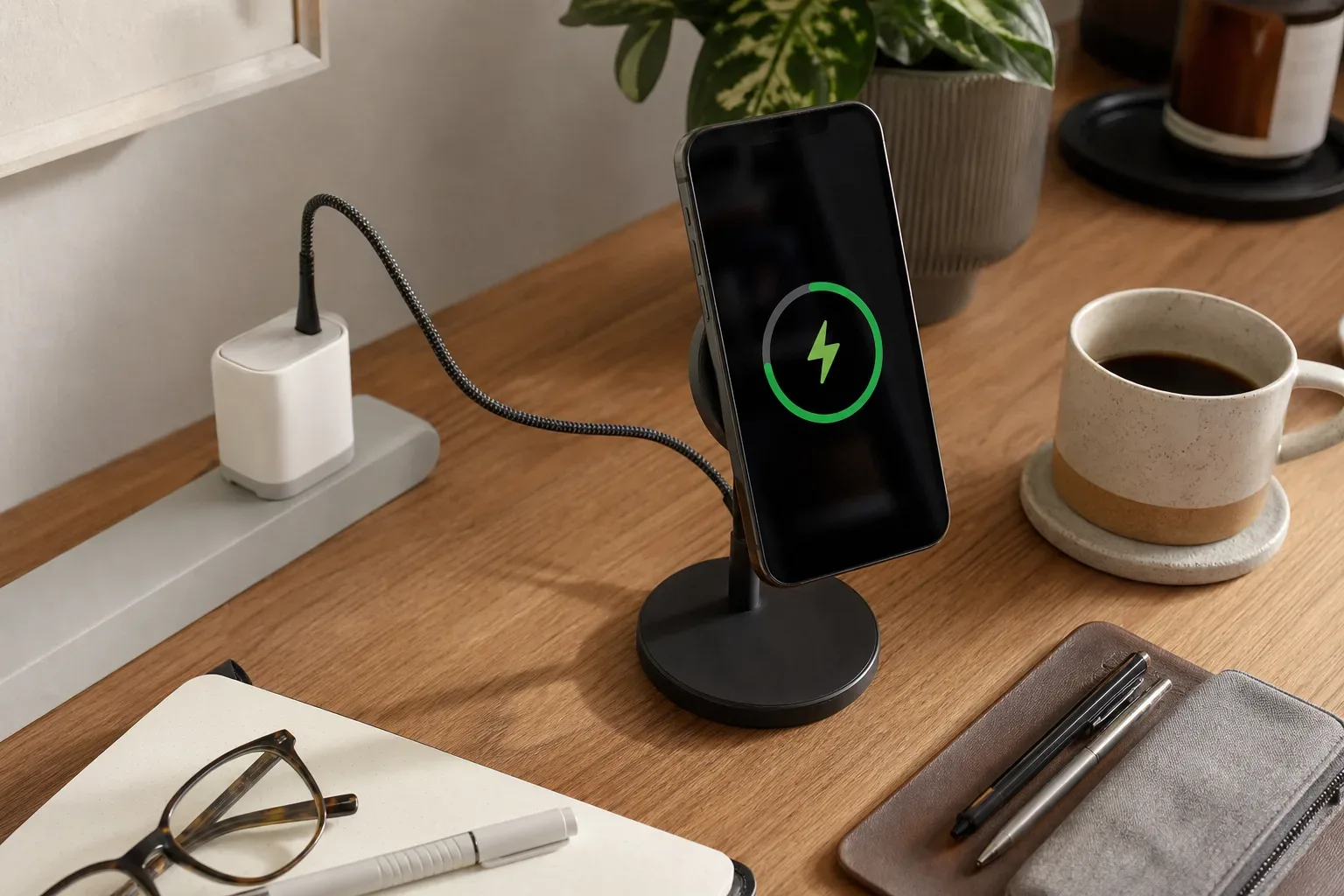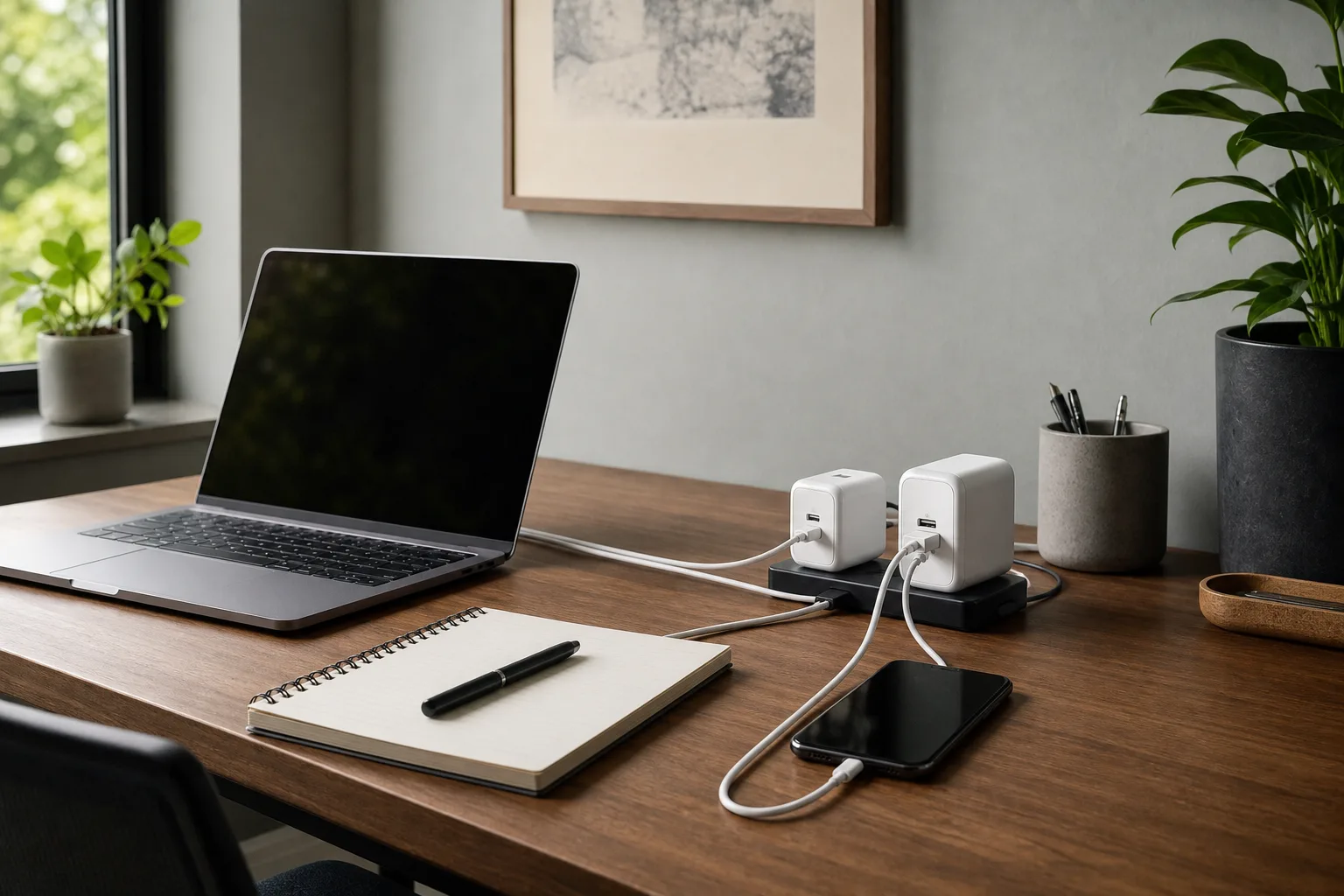
Start with the charging job: one phone overnight, a short top-up before leaving, or two devices on the same adapter. Those jobs can require different equipment even when every listing says “fast charging.” Keep the phone model, adapter model and cable type together when comparing options.
Match a real phone to a real adapter
Apple's iPhone fast-charge requirements, checked September 15, 2026, distinguish between generations. Here are two specific examples from its testing notes. These are manufacturer requirements and test conditions; they do not promise the same charging time during navigation, gaming or hot weather.
| Phone and connection | Documented adapter example | What to compare |
|---|---|---|
| iPhone 15; USB-C cable | Apple 20W USB-C Power Adapter, A2305, appears in Apple's iPhone 15 test conditions. | A third-party alternative needs USB Power Delivery support; do not choose by connector shape alone. |
| iPhone 17, 17 Pro or 17 Pro Max; USB-C cable | Apple specifies 40W or higher for its roughly 20-minute, 50% charge claim; its test adapter is A3351. | A 20W adapter is not the setup behind that faster claim. Check the exact model before paying for extra wattage. |
For an Android phone, open the manufacturer's support page for that exact model and record its required protocol. If it calls for a particular PPS mode or proprietary adapter, a generic wattage match is incomplete. Save the support link alongside the candidate adapter's output table so that a salesperson's description cannot quietly replace the requirement.
Read the two-device combination
The Apple 35W Dual USB-C Port Power Adapter shows why port count matters. Apple documents up to 17.5W per device for an iPhone and iPad together. An iPhone with Apple Watch or AirPods can receive up to 27.5W, with up to 7.5W for the smaller device. The two sockets do not each supply 35W.
Apply that check to any multiport adapter. Draw the exact combination you intend to connect and copy the shared-output row from its manual. A label showing one-port output does not answer whether a phone will retain that output beside a laptop. If that row is missing, ask the manufacturer before buying for simultaneous fast charging. Our compact travel-charger guide covers the packing trade-offs.
Separate a compatibility claim from a safety claim
- Find the model on the actual item. Compare the seller's label photograph with the manufacturer's support page, including regional plug and input markings. A family name alone is not enough.
- Verify the claimed certification. For USB certification, use the USB-IF product search. For a separately claimed electrical-safety mark, use the issuing organization's records and match the model. One type of certification does not establish every other kind of compliance.
- Check the seller and support route. Keep an invoice that identifies the adapter and seller. A documented warranty is useful only if you can submit the evidence it requires.
- Choose the cable separately. Check both ends, required power rating and usable length. Start with our USB-C cable guide if the listing combines power and data claims.
Decide before opening the package
Reject a candidate if you cannot establish its identity or the output needed for your actual device combination. Once it arrives, compare the markings again and inspect the housing, plug and cable. Do not use visibly damaged equipment. Keep the manual and purchase details for support or a later recall check; an online comparison cannot certify an individual unit.
Prepared from the linked manufacturer and USB-IF documentation on September 15, 2026, using our research and testing method.