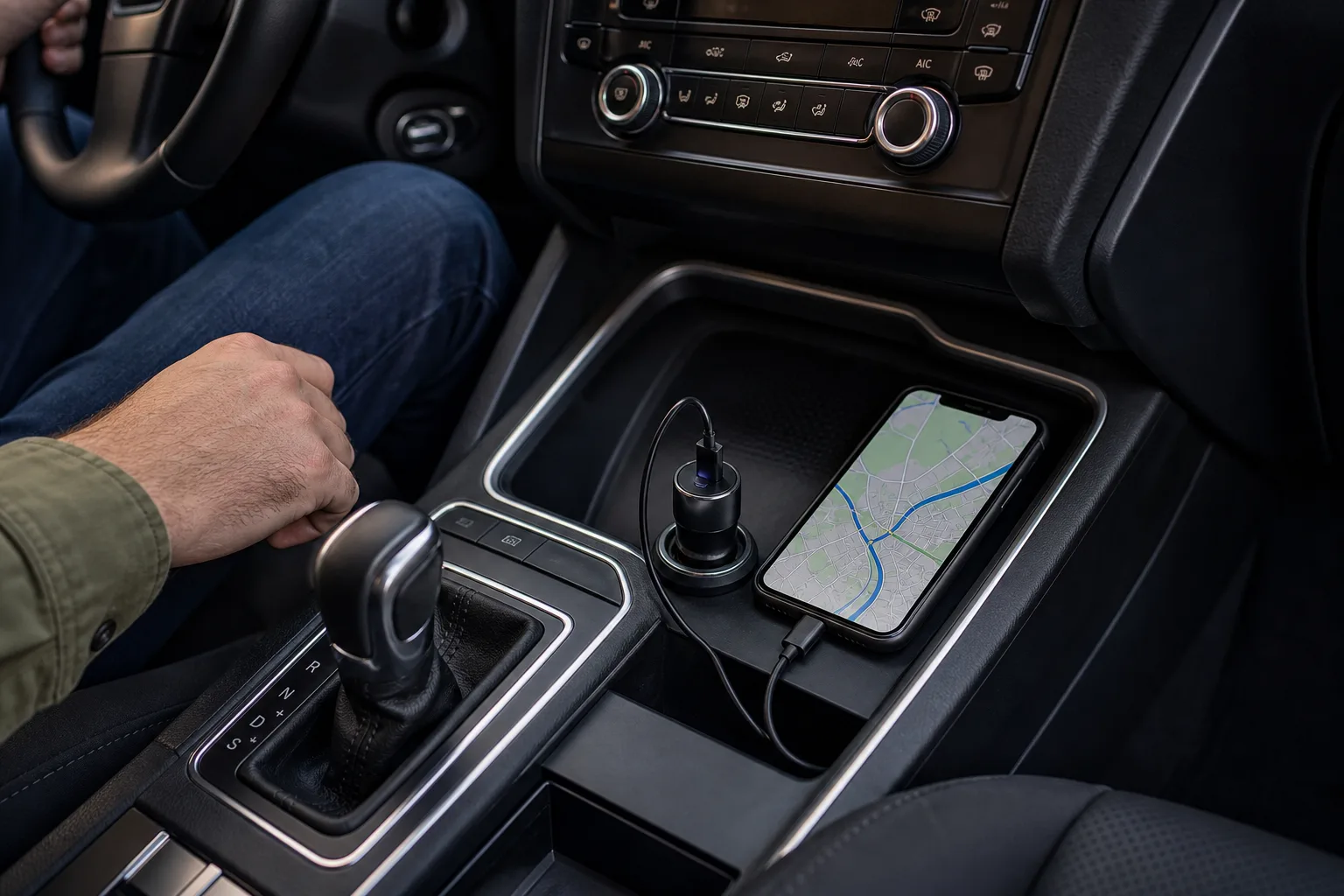
A road-trip charging setup has to fit the car as well as the phone. Locate the accessory socket and the phone's mounting position first. A charger that blocks a cup holder or a cable that crosses the gear selector is a poor fit even when its output looks sufficient.
Check the vehicle connection
Read the vehicle manual for the socket's permitted use and rating, then check the adapter's input specification. See whether the socket remains powered after the ignition is off. A built-in USB port may also handle the car's phone interface, so replacing its cable with a power-only connection can change how that interface works.
Plan for the passenger
If two phones will charge, compare the adapter's published two-port allocation. Keep the navigation phone on the port that supports its charging requirements. Use separate cables long enough to reach each seat without stretching across controls. A bundled cable is only useful if its connectors and capabilities match the job.
Check while parked
- Seat the adapter fully and confirm it does not wobble.
- Place the phone in the mount and connect the intended cable.
- Connect the passenger's phone as well and check both indicators.
- Move the steering wheel and controls through their normal range without a cable catching.
Manage the whole trip
Set the route before driving and stop safely to troubleshoot charging. Keep the phone out of direct sunlight where practical and follow device temperature warnings. More advertised wattage cannot solve a bad connector, a cable snag or an overheated phone. For a compatible iPhone power combination, consult Apple's charging guide.
Research-based guidance. Read our sources, testing and illustration policy.