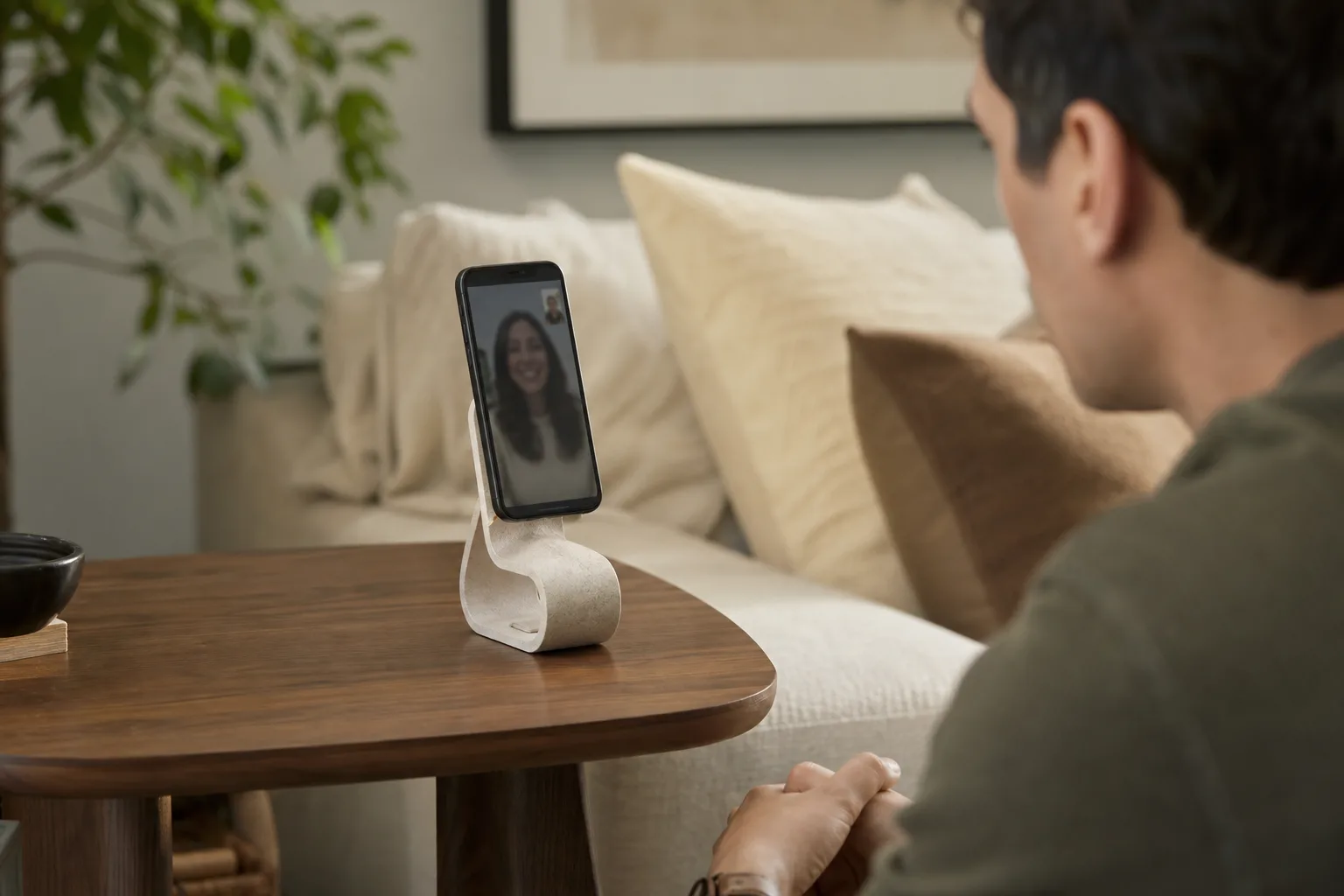
A phone stand in a living room needs to work from the seat where you will use it. A low tabletop stand may be fine for reading at a desk but leave the screen difficult to see from a sofa. Decide whether the main job is video calls, watching something or simply giving the phone a resting place.
Measure with the phone in position
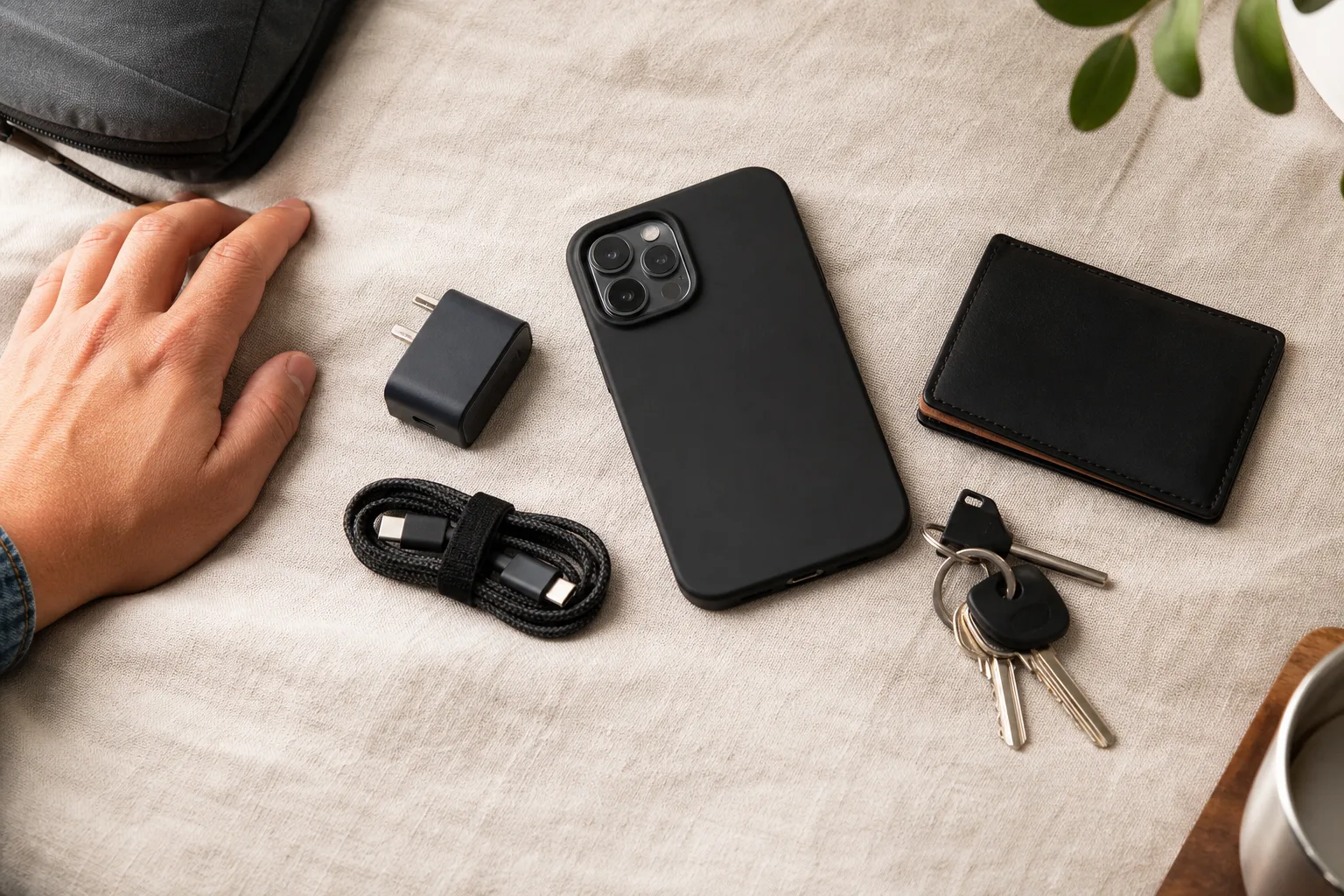
Compare the stand's base and the space occupied by the phone in portrait and landscape orientation. Check whether the camera surround, case ring or wallet prevents it from sitting against the support. Leave room to place and remove the phone without knocking nearby objects.
Check cable clearance
If the charging port faces down, the stand needs room for the connector and a relaxed cable bend. A tall-looking stand may still have a narrow opening. Route the cable so it does not pull the stand toward the edge of the table.
Match adjustment to the job
A fixed angle is simple if you use one seat. An adjustable hinge offers flexibility but should hold the cased phone at the intended angle. Test stability on a flat surface before tapping the screen. Keep the stand away from edges and do not use an unstable arrangement to compensate for the wrong viewing height.
Keep charging optional
A stand without electronics can remain useful after a phone upgrade if its dimensions still fit. A charging stand adds compatibility requirements and a cable route of its own. Buy that feature only if you want the phone to charge in that location; otherwise a simple support and the charging equipment you already own may be sufficient.
Research-based guidance. Read our sources, testing and illustration policy.